
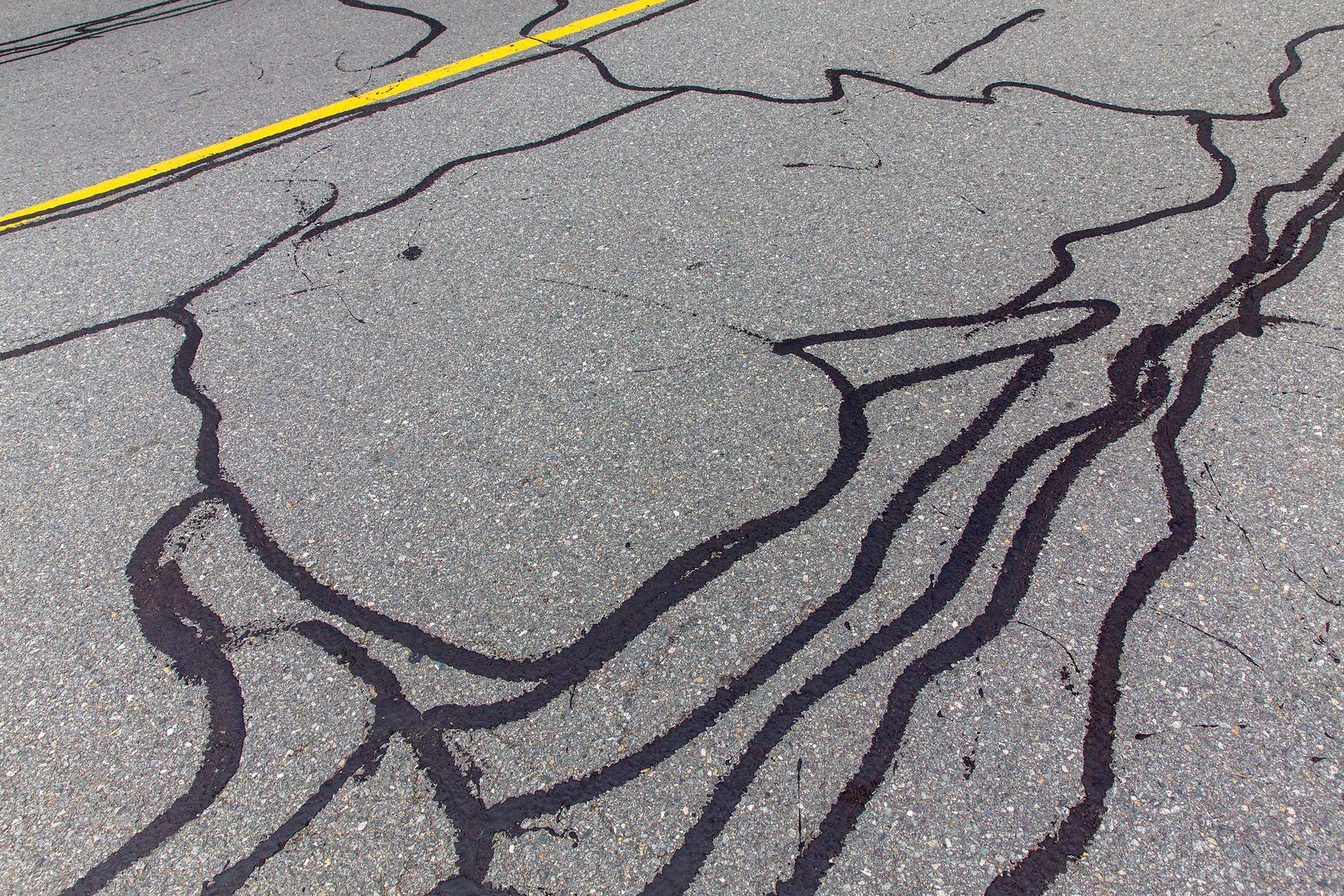
Treatment That Stops Pavement Deterioration
Crack Fills in San Antonio for asphalt surfaces showing early structural stress
Cracks in asphalt pavement create direct pathways for water to reach the base and subgrade layers, where it weakens load-bearing capacity and accelerates structural failure through freeze-thaw cycles and erosion. Gentz Paving applies crack fills in San Antonio as a preventative maintenance solution that seals these openings before they expand into costly failures. You recognize the need when cracks appear as narrow lines in parking lots, driveways, or roadways—often starting at joints, edges, or areas with heavy turning traffic—and the benefit becomes clear when those cracks stop widening, water no longer penetrates the pavement structure, and the surface remains intact through seasonal temperature changes.
The crack filling process involves cleaning debris from the crack channel, heating the area to ensure proper adhesion, and applying rubberized sealant material that flexes with pavement movement while preventing moisture intrusion. This treatment works on linear cracks, joint separations, and other narrow failures, but it is not effective for alligator cracking or large areas of interconnected surface damage, which indicate base failure requiring reconstruction.
Request an evaluation to identify which cracks require immediate treatment and which sections of pavement need more extensive repair.
How Crack Treatment Protects Pavement Structures
Untreated cracks allow rainwater to infiltrate the aggregate base, where it saturates the material and reduces its ability to support loads, causing the asphalt above to flex excessively and develop more cracks in a cascading failure pattern. In San Antonio, where intense summer heat causes pavement expansion and occasional winter freezes create contraction stress, even small cracks widen rapidly without intervention.
After crack filling is completed, sealed areas shed water instead of channeling it into the pavement structure, the filled cracks remain flexible enough to accommodate minor thermal movement without reopening, and the treated surface resists further deterioration from oxidation and debris accumulation. The visual result is a uniform surface free of open joints and expanding fissures, which also improves safety by eliminating tripping hazards and uneven areas where water collects.
Crack filling is most effective when applied early in the crack's development, before edges begin to crumble or the opening widens beyond a half inch, and it should be repeated as part of a regular maintenance cycle since new cracks will eventually form as pavement ages. The treatment does not strengthen the pavement or repair underlying base damage; it functions solely to prevent moisture infiltration and slow the progression of surface-level failures.
Common Questions About Crack Treatment
Property owners and facility managers often ask similar questions when considering crack filling as part of their pavement maintenance strategy.
What types of cracks can be effectively filled?
Linear cracks, joint separations, and edge cracks respond well to filling, while interconnected alligator cracking indicates structural failure that requires removal and replacement of the affected area.
How soon should cracks be treated after they appear?
Treatment is most effective within the first season after cracks form, before edges deteriorate and the opening becomes too wide for sealant to bridge effectively.
What material is used for crack filling and why does it matter?
Rubberized hot-pour sealant is applied because it remains flexible through temperature changes, adheres strongly to asphalt, and resists wear from traffic in San Antonio's climate conditions.
How long does crack filling last before it needs to be redone?
Properly applied crack sealant typically performs for two to four years, depending on traffic volume, sun exposure, and whether the pavement continues to settle or shift beneath the surface.
Why do some filled cracks reopen or new cracks appear nearby?
Crack filling treats the symptom—the opening in the surface—but does not eliminate the underlying cause, which may include base settlement, poor drainage, or pavement age, all of which continue to stress the asphalt.
Gentz Paving evaluates crack patterns to distinguish between surface-level failures that respond to filling and deeper structural problems that require more extensive intervention. Schedule an inspection to assess crack severity and determine the appropriate maintenance response.